
-
×
 McLaren Over-The-Tire (OTT) Tracks Installation Kit
1 × $249.00
McLaren Over-The-Tire (OTT) Tracks Installation Kit
1 × $249.00
Subtotal: $249.00
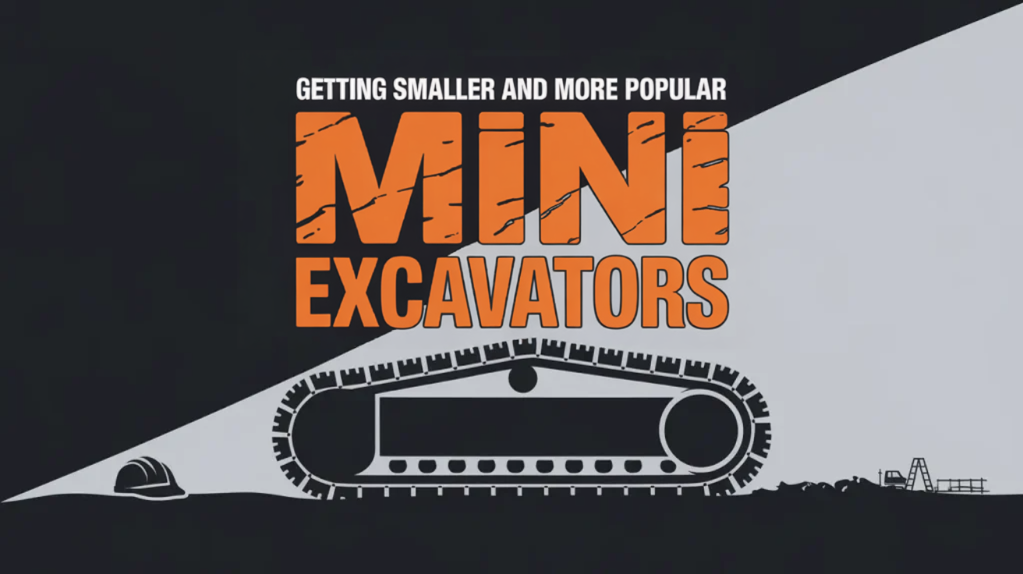
In the ever-evolving world of construction and landscaping, few pieces of equipment have experienced such a dramatic surge in popularity as the mini excavator. Once considered a niche tool for specialized applications, these compact powerhouses have become indispensable for contractors and landscapers across the industry. The global mini excavator market size in 2024 was estimated to be USD 6.8 billion, with projections to grow to USD 9.4 billion by 2033 at a CAGR of 3.5%, reflecting their increasing dominance in the equipment marketplace.
As the construction industry evolves, there is a growing demand for equipment that can efficiently handle smaller-scale projects. Compact mini excavators fulfill this demand and have become a staple in the construction equipment market. But what's driving this remarkable growth? The answer lies in the perfect storm of urbanization, evolving project demands, and the relentless pursuit of efficiency in increasingly constrained job sites.
So, these little guys weren’t always in the spotlight. Back in the late 1960s and early 1970s, they were born out of necessity in Japan’s bustling cities. But it wasn’t until the 1990s that they really started making waves internationally. Their small size and versatility have made them a popular choice over the past 30 years. Fast forward to today, and these little diggers everywhere!
The shift toward mini excavators represents more than just a trend—it's a fundamental change in how the industry operates. Beyond traditional construction sites, mini excavators are finding new applications in diverse industries, fueling their demand even further. Landscaping, agriculture, and specialty trades such as forestry and demolition are increasingly incorporating mini excavators into their operations.
This expansion into new markets has been driven by the machines' remarkable versatility. These compact, highly versatile machines are perfect for digging, trenching, demolition, and landscaping tasks, especially in tight spaces where larger equipment can't operate efficiently. What was once accomplished by multiple specialized tools can now be handled by a single, adaptable machine.
Perhaps the most significant development in mini excavator design has been the relentless drive toward smaller, more maneuverable machines. This isn't about downsizing for its own sake—it's about meeting the practical demands of modern jobsites where space is at a premium and accessibility is everything.
A standard excavator is a massive machine that often won't fit in confined workspaces. That's where the mini excavator comes in. A mini excavator has a compact design that allows it to navigate and operate within smaller job sites. This fundamental advantage has opened up entirely new categories of work that were previously impossible or prohibitively expensive to tackle.
The trend toward ultra-compact models has been particularly pronounced. The Bobcat E10 and E10e are ideal for jobsites with many obstacles and tight spaces as their lightweight and compact frame allow them to maneuver narrow openings with ease. Their size and weight also make them easy to transport — saving time, boosting productivity and reducing wear. These machines represent the cutting edge of compact design, where every pound and inch has been carefully optimized for maximum capability in minimal space.
For most applications requiring tight-space maneuvering, consider the 1-ton mini excavator model for most tight-space applications. Most of the time, these machines are the right mix of strength and flexibility, able to handle most tasks without limiting their mobility. This sweet spot of power and compactness has become the gold standard for contractors and landscapers who need to balance capability with accessibility.

The landscaping industry has been one of the biggest beneficiaries of mini excavator evolution. As homeowners increasingly invest in outdoor living spaces and property improvements, landscapers need equipment that can access residential areas without causing damage or disruption.
Compact mini excavators are perfect for small-scale projects in tight spaces or residential areas where larger machines may not fit or cause damage to surrounding structures. This capability has been transformative for landscaping contractors who previously had to rely on manual labor or specialized, less efficient equipment for backyard projects.
The versatility of mini excavators in landscaping applications is remarkable. These machines can handle trenching for irrigation systems, grading for patios and walkways, demolition of old structures, fence installation, and precise excavation for pools and water features—all with the same piece of equipment. This multi-functionality not only improves efficiency but also reduces the need for multiple machines on jobsites where space is already limited.
The transportation advantages are equally compelling. At just 2,593 pounds, the nimble Bobcat E10 mini excavator leverages a superior power-to-weight ratio. Operators can easily maneuver it through gates and across lawns. This ability to access backyards through standard gates has opened up countless opportunities for landscaping contractors, making previously challenging projects routine.
The urbanization trend has created unique challenges for construction contractors. City jobsites are characterized by tight spaces, limited access, and the need to work around existing infrastructure without causing disruption. Traditional large excavators simply can't navigate these environments effectively.
The primary advantage of using a mini excavator is its ability to work in confined spaces, such as urban areas or small job sites, where larger excavators cannot operate. This fundamental capability has made mini excavators essential for urban construction projects, from utility installations to building renovations.
The low-impact nature of mini excavators also addresses another critical urban construction challenge: minimizing disruption to surrounding areas. Mini excavators offer incredible performance in a small package. They're easy to transport, perfect in tight spaces, and have a low impact, reducing costs. This combination of capability and minimal disruption has made them the preferred choice for contractors working in developed areas where every square foot matters.
Clearly, the manufacturers of compact excavators are in strong agreement over the drivers of the segment and potential for the future as the country’s city infrastructure matures and demands more delicate and unobtrusive construction operations. Taking the broad view, Dave Wood, product application specialist at Caterpillar, adds: “The use of compact excavators continues to grow worldwide as urban job sites become more restricted. Caterpillar’s Wood concludes: “The compact excavator is a versatile tool. It is traditionally thought of for use in areas where other machinery might not be able to gain access — and this is where these machines excel.”
However, he notes, in addition to this, the ease of transport and the ability to handle different work tools other than just buckets, make them a good choice for working on any jobs away from built-up areas, including irrigation projects and land maintenance. This brings us to our next topic.
One of the most significant developments in mini excavator design has been their evolution into versatile tool carriers. Compact or mini excavators have exploded in numbers over the years, becoming more popular not only for digging on tight jobsites but as tool carriers. This transformation has multiplied their utility exponentially.
Mini excavators can be equipped with a variety of attachments like buckets, augers, hammers, and grapples, making them suitable for multiple tasks like:
This adaptability means contractors can use a single machine for multiple phases of a project, dramatically improving efficiency and reducing equipment costs. Plus, the quick-attach systems on modern mini excavators make switching between attachments a matter of minutes rather than hours, allowing contractors to adapt to changing project requirements without significant downtime. This flexibility has been particularly valuable in landscaping and urban construction, where project scopes can change rapidly.
The financial advantages of mini excavators extend far beyond their initial purchase price. Their compact size makes them significantly easier and less expensive to transport between jobsites. A single truck can often handle a mini excavator and its attachments, compared to the specialized transport required for larger equipment.
Fuel efficiency is another major advantage. Mini excavators consume significantly less fuel than their larger counterparts while still delivering impressive performance for their size. This efficiency translates directly into lower operating costs and improved project profitability.
The reduced learning curve for operators is also economically significant. Mini excavators are generally easier to operate than full-size excavators, reducing training time and making it easier to find qualified operators. This accessibility has been particularly valuable for smaller contractors who may not have operators with extensive heavy equipment experience.
So there you have it, Mini excavators – the little engines that could. They’re small, they’re smart, and they’re changing the game. As urbanization continues and jobsites become increasingly constrained, the demand for compact, versatile equipment will only grow. Mini excavators have proven they can deliver the performance contractors need while fitting into the spaces where modern work happens.
The continued evolution toward even more compact designs, combined with advancing technology and attachment versatility, suggests that mini excavators will become even more central to construction and landscaping operations. For contractors and landscapers looking to stay competitive in an increasingly space-constrained world, mini excavators aren't just a smart choice—they're becoming an essential tool for success.
The mini excavator revolution is far from over. As these machines continue to get smaller, smarter, and more capable, they're reshaping entire industries and opening up possibilities that simply didn't exist with traditional equipment. Keep your eyes peeled for the next big thing in construction and landscaping – it might just be one of these pint-sized powerhouses!
The Ultimate Mini Excavator Size Chart and Spec Guide (updated June 19, 2024) --- https://dozr.com/blog/mini-excavator-spec-guide
Lawn and Landscape Magazine Article --- CASE Construction Equipment debuts 4 new mini excavators
At the smallest end of the range is the 2,932 lb (1,330 kg) CX12D mini excavator. Ideal for constricted environments, the CX12D offers a lighter footprint, can easily move through gates and around structures, and works effectively in hard-to-reach places. The cost-efficient CX12D offers a right-sized solution for smaller jobs, with low acquisition, operating costs and excellent fuel efficiency. https://www.lawnandlandscape.com/news/case-construction-equipment-debuts-4-new-mini-excavators/
Lawn and Landscape Magazine Article --- Develon showcases three new mini excavators
Develon recently rolled out three new mini excavators and a compact track loader, including the DX42-7 mini excavator. The conventional tail swing DX42-7 mini-ex is ideally suited for navigating tight spaces and congested job sites, like residential yards and urban landscapes. https://www.lawnandlandscape.com/news/develon-mini-excavators-compact-track-loaders-equip-expo/
 McLaren Over-The-Tire (OTT) Tracks Installation Kit
1 × $249.00
McLaren Over-The-Tire (OTT) Tracks Installation Kit
1 × $249.00 Subtotal: $249.00