
-
×
 McLaren Over-The-Tire (OTT) Tracks Installation Kit
1 × $249.00
McLaren Over-The-Tire (OTT) Tracks Installation Kit
1 × $249.00
Subtotal: $249.00
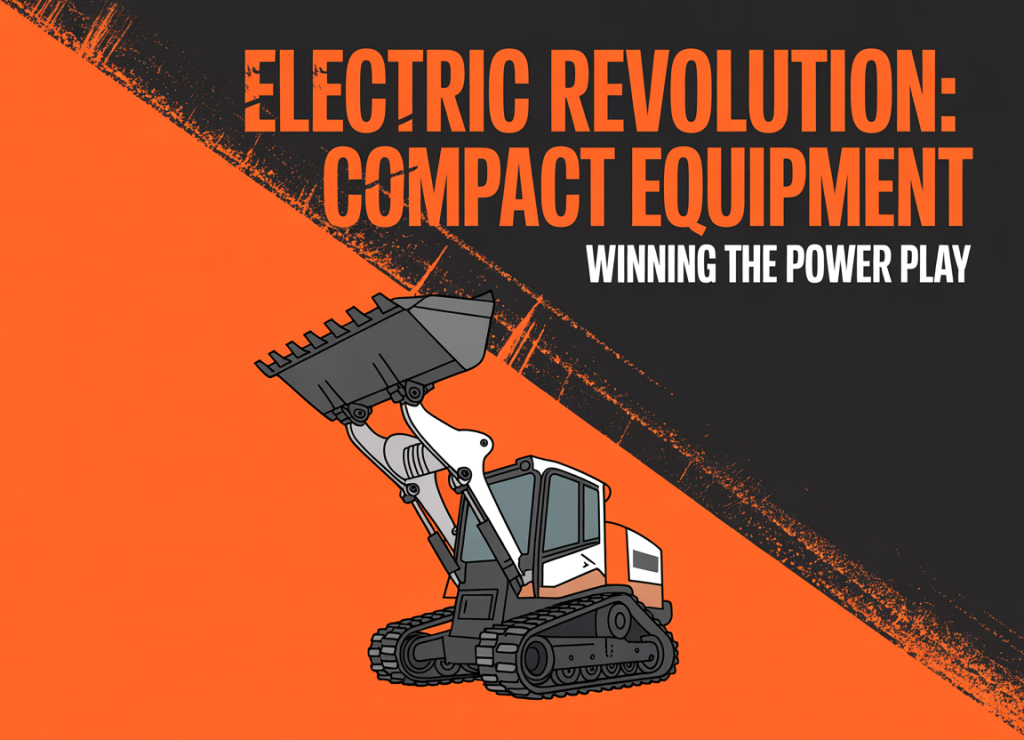
Electric construction equipment is everywhere in the headlines these days, but here's what most people miss: while the big machines are still figuring out hydrogen and hybrid systems, compact equipment has already cracked the code. Battery-powered mini excavators, compact track loaders, and telehandlers aren't just concepts or prototypes—they're out there right now, getting the job done on real job sites.
This isn't some far-off future. This is happening today, and it's changing everything about how crews work.
Electric technology isn't exactly new, but finding the right match in construction? That took some figuring out. Compact machines turned out to be the perfect fit for battery power, and here's why:
They don't need massive battery packs or complicated charging setups. They're light, efficient, and built for the kind of work that plays to electric power's strengths. Think short bursts of activity, frequent moves between sites, and working in tight spaces—not digging mile-long trenches or running nonstop for 12 hours straight.
The pressure is on: Construction is facing increasing demands to lower emissions, cut noise pollution, and comply with tighter regulations, especially in urban and residential areas. Electric compact machines meet all these challenges without forcing crews to completely change how they work.
Here's where it gets smart: manufacturers didn't just slap batteries into existing diesel designs and call it a day. They used telematics and real-time usage data from connected fleets across North America to understand how these machines actually get used.
That data revealed the truth: compact equipment moves with the rhythm of modern job sites. Short tasks, frequent transport, tight workspaces. Load it on the trailer, drive to the next job, rinse and repeat.
So instead of building for theoretical extremes, manufacturers designed for what's typical. Battery capacity is engineered to support a full day's work based on actual duty cycles—no excess weight, no unnecessary complexity. The entire layout is optimized for electric drivetrains from the ground up, resulting in machines that are not only efficient but easier to operate and maintain.
As Ray Gallant, VP of product management for Volvo Construction Equipment put it: "The 48V battery packs and the duty cycles of compact machines are well matched." Volvo now has five electric models either in production or announced for North America.
Just six years ago, electric construction machines were novelties at trade shows—interesting to look at, but not taken seriously. Now? Manufacturers expect to be asked when their electric model is coming out.
"From a technological standpoint, electric-powered compact equipment was one of the easiest to go after," said Chris Lucas, product manager for excavators at JCB North America, which debuted its 19C-IE electric compact excavator back in 2019.
Electric power has had a long run in mining, demolition, aerial lifts, and industrial forklifts. Now it's making serious inroads onto general construction sites, particularly in the compact category.
Most electric models on the market today are electric/hydraulic: a lithium-ion battery replaces the diesel engine and powers an electric motor that runs conventional hydraulics. It's a proven approach that manufacturers have developed either in-house or by partnering with specialists like Green Machine, Moog Construction, and WhisperDrive.
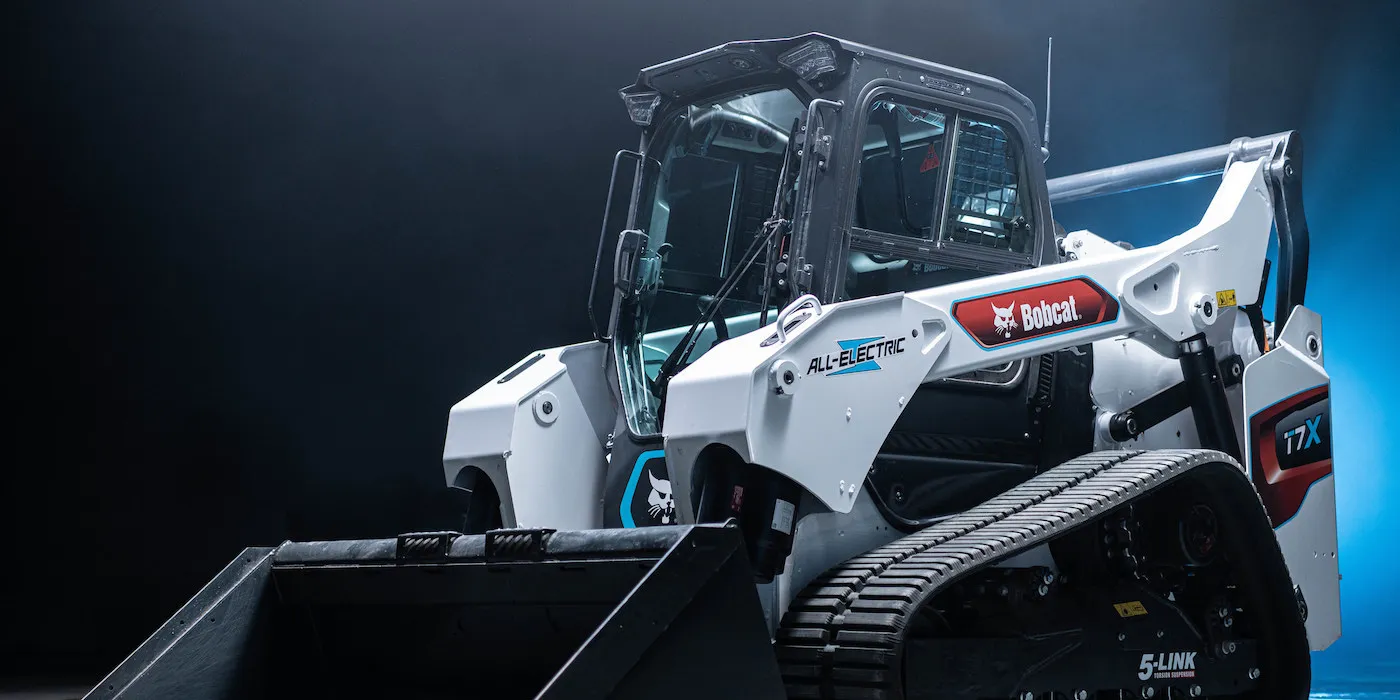
But there's an intriguing alternative that's turning heads: Doosan Bobcat's T7X compact track loader goes all-in on electric. It doesn't just replace the engine with a battery and motor—it eliminates hydraulics entirely, using an electrical drive system with electric cylinders and drive motors instead.
"With an all-electric system, it's power on demand, only using the energy you need for the task at hand," explained Dave Grabau, key account manager at Moog Construction, a partner on the Bobcat T7X project. "You're not running at wide open throttle or dumping hydraulic fluid over a relief valve and wasting that energy."
The result? A 5-to-6-ton machine with a usable power range of 100 to 150 hp—far beyond what emissions tiers would allow with diesel. The first Bobcat T7Xs are already rolling into Sunbelt Rentals' fleet.
Let's address the elephant in the room—or rather, the three elephants. While early adopters are jumping on board, most contractors want answers to these practical concerns:
Electric machines typically cost two to three times more than comparable diesel units, mainly due to battery costs. Ouch, right?
But here's the flip side: JCB's ROI study showed a 50% return on investment within three to five years. Why? Because there are virtually no maintenance costs. Joel Honeyman, VP of global innovation at Doosan Bobcat, added that as production volume increases, component costs will drop. "On the flip side, the operating cost of the T7X is one-tenth that of a comparable diesel-hydraulic machine."
Most manufacturers cite 4-to-8-hour run times for average use and an 8-hour overnight charge. But here's what makes comparing apples to apples tricky: electric machines behave differently than diesel.
"When you let off the joysticks of an electric machine, there's no idle," Honeyman explained. "An operator can get a day or more of productive work out of it because they're typically not running the machine eight continuous hours a day."
Compare that to diesel machines, where telematics data shows significant time spent just idling and burning fuel. With electric, if you're not actively working, you're not using power. It's that simple.
If the goal is zero emissions, charging your electric machine with a diesel generator defeats the purpose. So how do you power up on job sites?
Manufacturers are tackling this head-on. JCB developed a universal fast charger for its E-Tech fleet, with multiple charging options built in. Volvo is working with Beam Global on solar-powered, off-grid chargers that can be deployed rapidly without permitting or site prep.
Here's where mindset matters: "Electric charging requires a thinking reset," said Desmond Wheatley, CEO of Beam Global. "If a machine has access to a charger during idle times, you can just top it off like you do with your cell phone. You don't wait until it's empty."
The future gets even cooler: wireless job site charging is coming. With a ruggedized receiver on the bottom of a machine, it could charge simply by parking over a charging pad. No plugging in required.
Here's what really sets electric compact equipment apart—it opens doors that diesel machines keep closed.
Work anywhere, anytime: Near-silent operation and zero emissions mean crews can work in noise-sensitive zones like residential neighborhoods, schools, or hospitals. Jobs can start earlier, run later, and be done indoors without ventilation concerns.
In practice, this means:
Beyond traditional construction: Food production facilities, event venues, equestrian centers, and other non-traditional sectors are embracing electric machines for their clean, quiet operation. Whether it's preparing a show arena, warehouse maintenance, or supporting a processing plant, compact electric equipment extends its value way beyond standard job sites.
Want to accelerate the electric revolution? The answer is straightforward: better incentives and clearer government policy.
There's still a gap in total cost of ownership between battery electric and diesel equipment, though it's narrowing. Incentives that offset the higher upfront cost would speed adoption significantly. And if more countries and cities announced plans to phase out diesel machinery, it would give fleets the confidence to invest and manufacturers the volume to reduce prices.
Construction can be a "fast follower" to the advances made in the automotive EV sector, and the momentum is building.
Compact electric machines aren't just proving a concept—they're proving themselves where it matters most: on the job site. They've become a practical entry point into alternative energy without requiring a complete operational overhaul.
They're not a compromise. They're a solution backed by:
Imagine job sites maintained by this new generation of machines—powerful yet whisper-quiet, emission-free yet highly productive.
For operators, the benefits are immediate: no vibrations rattling through their body all day, no exhaust fumes in their workspace, no ear-ringing noise. They can communicate clearly with their crew and tackle tasks efficiently. It's a better work environment, period.
For contractors, it's about performance benefits, cost savings, regulatory compliance, and the ability to win bids they couldn't touch before.
For the industry, it's a glimpse of what's coming—and it looks pretty good.
There's a lot of talk about the future of construction equipment, but compact electric machines have moved past the talking stage. They're not "what might work someday"—they're what's working today.
For anyone still on the fence about electric construction equipment, compact machines make the strongest case yet. It's not about if electric is the future. It's about where to start.
And this is it.
Ready to explore what electric compact equipment can do for your operation? The technology is proven, the machines are available, and the future is already running on battery power.
 McLaren Over-The-Tire (OTT) Tracks Installation Kit
1 × $249.00
McLaren Over-The-Tire (OTT) Tracks Installation Kit
1 × $249.00 Subtotal: $249.00